Mastering Fortnite Zero Build Using Only Found Ground Loot And No Shops
 Cordelia Cross
May 8, 2026 01:48
0
Cordelia Cross
May 8, 2026 01:48
0
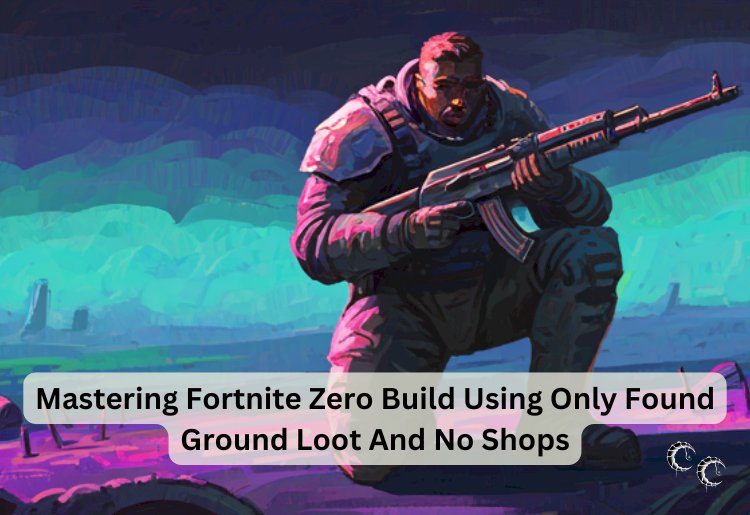
Zero Build removes one of the most defining systems in Fortnite, forcing players to rely entirely on movement, positioning, and weapon choice rather than structural defense. When you take that already stripped down format and remove access to shops, upgrades, and curated loadouts, the game shifts again. It becomes less about optimization and more about adaptation in its purest form.
Playing exclusively with ground loot introduces a layer of controlled chaos. Every engagement begins with uncertainty. You are not planning around a preferred loadout or an upgraded weapon path. Instead, you are reacting to whatever the map provides in real time. This forces a different kind of awareness, one that prioritizes flexibility over preference.
The first major adjustment is mental. Without guaranteed access to strong weapons or upgrades, the instinct to “reroll” or optimize disappears. That creates a mindset where every item must be treated as temporary rather than ideal. A grey weapon is not a downgrade. It is simply the current tool available for the next fight. That shift in perception is what allows consistency in an otherwise unpredictable environment.
Positioning becomes significantly more important in this format. In Zero Build, there is already no structural defense, but when loadout control is removed as well, survival depends almost entirely on engagement timing and spatial awareness. High ground, natural cover, and rotation paths become the real resources. Loot is secondary to location, and location determines everything.
Ground loot only play also forces a deeper understanding of weapon versatility. Instead of building strategies around a fixed loadout, players must learn how to make different combinations function under pressure. Close range weapons may need to carry fights they are not ideal for. Mid range tools may be used in roles they were not designed for. This adaptability is where skill expression becomes most visible.
Because there are no shops or upgrade systems involved, every encounter carries equal weight. There is no mid game correction through better gear. Mistakes are not easily compensated for, which increases the importance of decision making in real time. Choosing when to engage, when to disengage, and when to reposition becomes more critical than raw aim alone.
This format also exposes how heavily many players rely on resource security in standard gameplay. When that safety net is removed, hesitation becomes more costly. Players who pause too long to search for better gear often lose momentum. Meanwhile, those who commit to using what they have tend to maintain tempo and pressure, which often translates into more consistent survival outcomes.
Adaptation becomes the central skill. Each new drop location presents a different set of constraints. Sometimes the loot favors aggressive play. Other times it forces a defensive, survival focused approach. The best players in this format are not those who find perfect weapons, but those who can quickly reinterpret their strategy based on imperfect tools.
There is also a psychological shift that occurs over time. Without the expectation of optimization, frustration decreases. Players stop measuring success by loadout quality and start measuring it by decision quality. Winning a fight with suboptimal gear feels more meaningful because it is grounded in execution rather than advantage.
Ultimately, mastering Zero Build with only ground loot is not about limiting yourself for difficulty’s sake. It is about removing systems that reduce variability and forcing constant adaptation. The game becomes less about preparation and more about response.
In that environment, consistency is not built on having the best equipment. It is built on the ability to turn whatever you find into a workable strategy under pressure. And in Fortnite Zero Build, that adaptability is often the difference between elimination and survival.