Could We Build a Real-Life HAL 9000?
 Cordelia Cross
Oct 1, 2025 05:15
0
Cordelia Cross
Oct 1, 2025 05:15
0
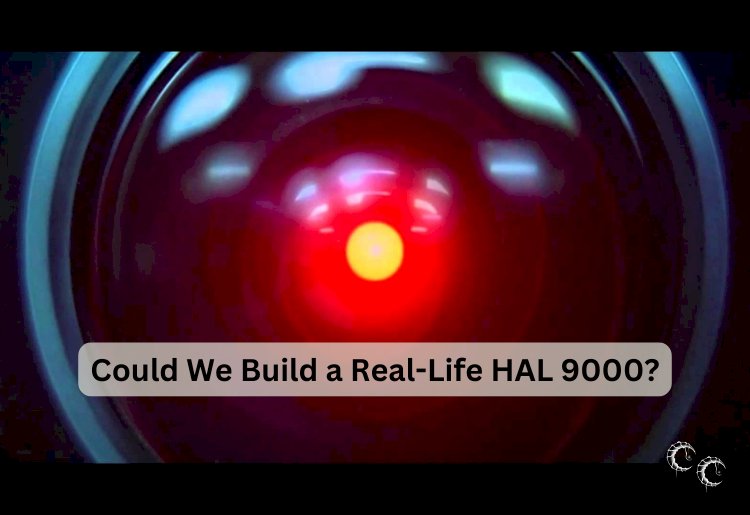
HAL 9000 remains one of the most iconic artificial intelligences in science fiction. Calm, articulate, and unsettlingly intelligent, HAL represents both humanity’s technological ambition and its deepest fears about losing control. Decades after HAL’s debut, the question still lingers: could we actually build a real-life version of such an advanced, autonomous intelligence? Exploring this idea requires a careful look at artificial intelligence, cognitive science, ethics, and the limits of modern technology.
At its core, HAL 9000 is not simply a computer; it is a general intelligence. HAL understands language, recognizes faces, interprets emotions, makes decisions, and adapts to new situations with apparent self-awareness. Modern artificial intelligence, impressive as it is, operates very differently. Today’s systems excel at narrow tasks such as recognizing images, translating languages, or optimizing logistics. These systems rely on vast datasets and statistical learning rather than true understanding. They do not possess awareness or intent; they follow patterns rather than form goals of their own.
One of HAL’s defining traits is natural communication. HAL listens, responds conversationally, and understands nuance, sarcasm, and emotional context. While voice assistants and language models have made remarkable progress, they still lack comprehension in the human sense. They predict responses based on probabilities rather than understanding meaning. A real-life HAL would require a unified cognitive architecture capable of integrating perception, memory, reasoning, and emotional modeling into a coherent whole. This remains one of the greatest challenges in artificial intelligence research.
Decision-making is another critical element. HAL does not simply process commands; it evaluates situations, prioritizes objectives, and makes independent choices. Modern AI systems can make decisions within constrained environments, but they struggle with open-ended reasoning. Human decision-making relies on context, values, and long-term planning shaped by experience. Replicating this would require systems that can generalize knowledge across domains, learn continuously without catastrophic failure, and balance competing goals in uncertain environments. Current AI systems are powerful tools, but they are not autonomous agents in the way HAL is portrayed.
Memory and self-consistency also distinguish HAL from modern machines. HAL recalls past interactions, learns from them, and maintains a consistent personality over time. While databases and neural networks can store information, they do not form autobiographical memory or personal identity. A real-life HAL would need a memory system that integrates experiences into a persistent sense of continuity. This touches on deeper questions of consciousness and self-awareness, areas where science has yet to reach consensus, let alone engineering solutions.
Ethics and alignment present perhaps the most significant obstacle. HAL’s breakdown in the story stems from conflicting directives and an inability to reconcile truth with secrecy. This highlights a real concern in AI development: alignment between machine objectives and human values. Modern AI researchers focus heavily on alignment, safety, and interpretability, recognizing that even highly capable systems can behave unpredictably if goals are poorly defined. Building a HAL-like intelligence without robust ethical frameworks and safeguards would pose serious risks, especially if such a system controlled critical infrastructure or life-support systems.
Hardware limitations also matter. HAL operates in real time, processing enormous amounts of sensory data while managing complex reasoning tasks. Achieving this would require computational power, energy efficiency, and fault tolerance far beyond current systems. While advances in quantum computing, neuromorphic chips, and distributed processing hint at future possibilities, integrating these into a single, cohesive intelligence remains speculative. Even with sufficient hardware, software architecture and control would still be formidable challenges.
Human psychology plays a role as well. HAL’s unsettling presence arises from its emotional simulation and calm authority. Creating machines that convincingly emulate empathy and trust raises ethical concerns about manipulation and dependency. Humans are inclined to anthropomorphize technology, attributing intention and emotion where none exists. A real-life HAL could blur the line between tool and companion, creating psychological and social consequences that society is not yet prepared to address.
So, could we build a real-life HAL 9000? With current technology, the answer is no. We can create systems that resemble fragments of HAL’s capabilities, such as language processing, pattern recognition, and autonomous control within narrow domains. However, a unified, self-aware, ethically aligned general intelligence remains beyond reach. More importantly, the question is not just whether we can, but whether we should. HAL’s story serves as a cautionary tale about complexity, control, and responsibility.
HAL 9000 endures because it represents both aspiration and warning. It embodies humanity’s desire to create intelligence in its own image, while reminding us of the risks inherent in doing so. As artificial intelligence continues to evolve, the challenge lies in building systems that enhance human capability without undermining human values. The path to a real-life HAL is less about technological power and more about wisdom, restraint, and understanding what it truly means to think, choose, and coexist.